The busiest coaches I meet have the least predictable months
I talk to a lot of coaches and consultants.
Some of the busiest ones post every day. They run ads, record a podcast, launch every quarter.
Their front end never stops moving. New followers, new subscribers, and some front-end sales.
Then I ask how many premium clients they'll sign next month. Most of them can't tell me.
One good month. Two quiet ones. Then a scramble.
And when a premium sale does come, it usually comes at the end of a chase. A discovery call. A proposal. Three follow-ups. "Let me think about it."
Most good coaches hate that part. It feels pushy, it eats the week, and every "no" lands on them personally.
All that motion is happening in the wrong place
Posting, ads, DMs and launches are front-end work. They bring new people in.
But the money that makes a month predictable rarely comes from new people.
It comes from the next sale. The client who got a win and wants more.
That person already trusts you. They know how you work. They've already decided you're worth paying.
And in most businesses, nobody asks them.
So premium sales are left to luck, or to a chase.
That's the real problem. Not a shortage of leads. Premium sales that only happen when someone chases them, which is why they never become predictable, and never feel good.
The easiest premium sale is the one the buyer asks for.
I'm Pedro Martins. I work on commission with a handful of partners, all at high six figures or more. I rarely take a new one.
I only get paid when a sale happens. So I can't afford sales that depend on luck, or on someone chasing.
What I do instead, every time, is flip who does the chasing.
I call it the Reverse Chase.
You give the people who already bought from you a two-second way to tell you they want more.
They raise their hand. You answer.
And because they asked first, nothing you say after that is a pitch. It's a reply to a request.
That changes how the sale feels, for them and for you. Nobody gets pushed. Nobody gets turned down. You're helping someone who asked for help.
What it gives my partners back
The people I work with all tell me some version of the same thing. They don't want more hustle. They want to know their business is covered, with a healthy margin.
Because once they know the business makes enough every month, they can say yes to the rest. Time with their families. Thinking about the next product. That event gig, and the weeks it takes to plan it. A real holiday.
That certainty rarely comes from what you can't control. Ads change. Algorithms change. Content goes up and down.
It comes from the one place you do control: your list. The people who trusted you with their email, and some of them with their money.
A business is built on trust, and grows when you put that trust to work. These emails do exactly that. They turn trust you've already earned into new business, so every sale is simpler and faster.
And they build more trust each time you send them, because they come from genuine care and curiosity.
Why 4 lines change the sale
The email is 4 lines. You get them word for word inside, with the subject line and what to reply to every answer.
Yes, it looks simple. Most check-in emails ask "how's it going?" and get ignored, because there's nothing easy to say back. These 4 lines leave people two possible answers, and each one tells you exactly how to help them.
Here's what those 4 lines do:
The first line is about them and what they wanted. Your offer isn't in it.
One question sorts your buyers in two seconds, without anyone feeling sorted.
The ones who are ready reply with one word that tells you if they want next-level help, or still need help feeling ready for that jump. Either way, you know exactly how to lead the conversation and support them.
The last line makes it safe to reply. It comes from care, not from a sales script.
Why the people who aren't ready yet are as valuable as the ones who are, and the reply that turns them into your next sale, or your next product.
The one line you change, so it sounds like you and fits what you sell.
That one-word reply is a micro-commitment. The smallest yes a person can give. And small yeses are what get people invested in a solution before you've even shown it to them.
You send 4 linesto people who bought from you
↓
They reply with one worda micro-commitment, in writing
↓
"I'm ready for more"A buyer asking for the next step. You answer, and the sale starts with them asking.
"I'm not there yet"A buyer who wants the win. Help them get it, and they trust you more. Ask what's in the way, and they show you what to sell next.
And if you're wondering what your list will think of you for sending it: these emails have gone to lists whose owners worried about exactly that. They sent them anyway. Their readers didn't see a pitch. They saw someone who cared enough to ask. That's why they're safe to send.
You'll also get my #1 email to get a whole list talking
The 4 lines go to the people who bought from you. This one goes to everyone on your list, buyers or not.
It gets people to put their hand up for the problem you solve, in their own words.
When a partner brings me in, these are the exact emails I send. I start with the buyers of whatever comes before the offer we're promoting, to see where they are. Then I move to the whole list, to see where everyone else is.
Then every reply is an opportunity
They're ready for the next stepWe talk about that next step, and open and close sales for it. By email.
They're not ready yetWe find out what's missing. That shows how to improve the offer they bought, so more people buy it. Or where a bridge offer fits, one that makes the next sale even easier.
The list feels deadWe warm it up first. Then we send, and the conversations come.
So this is much more than opening sales conversations. Every reply makes the whole business sharper.
What happened when people sent it
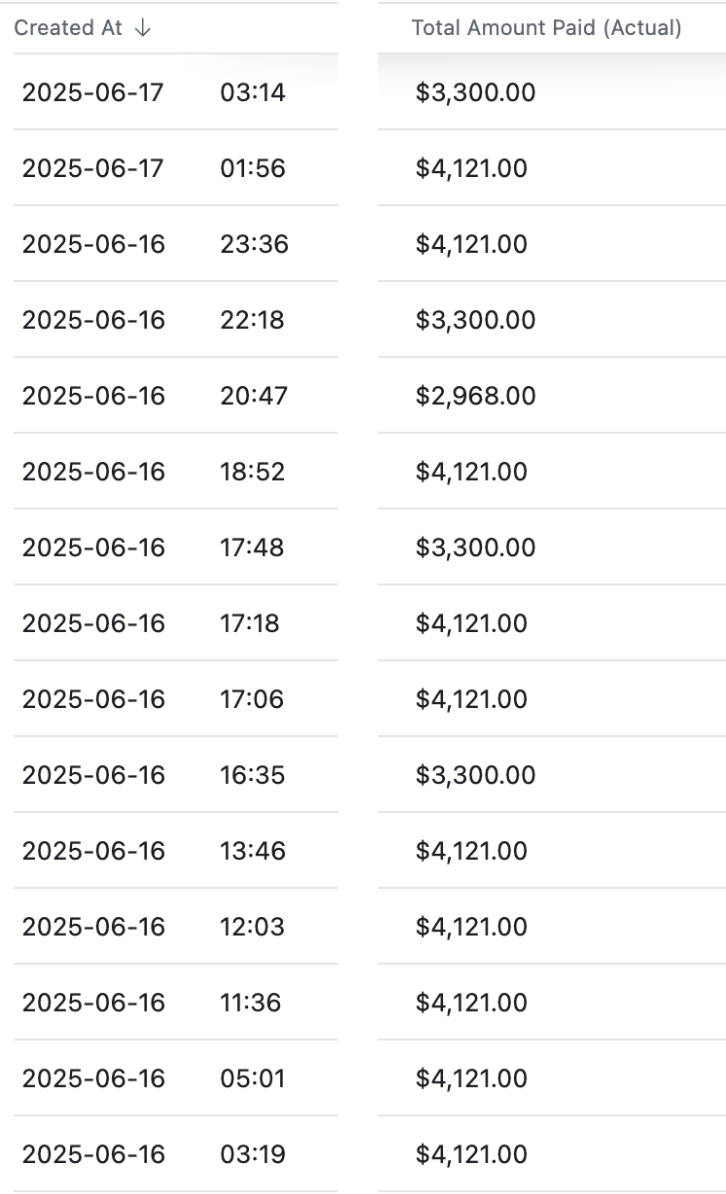
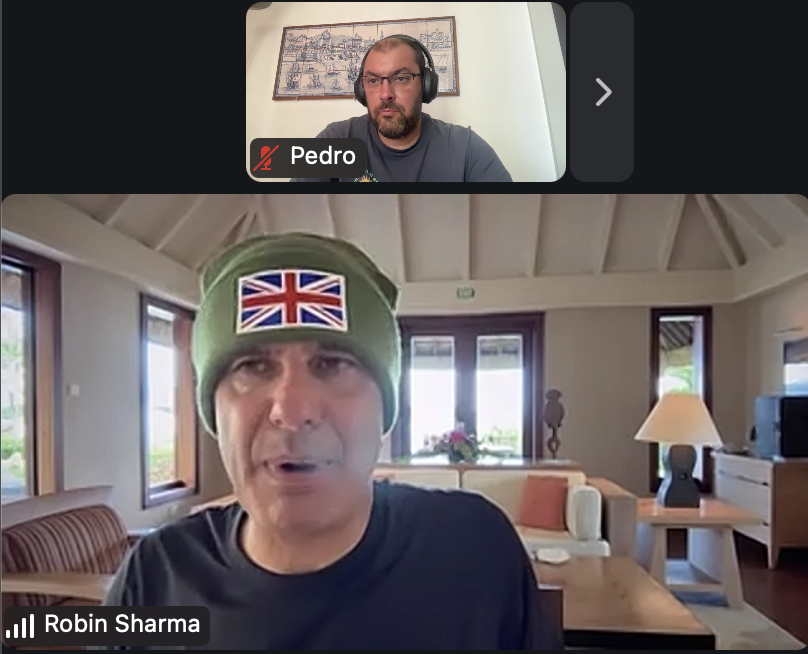
Robin Sharma's USD 36,500 mentorship. 30 seats in two months.
Robin Sharma's team brought me in to build his mentorship offer. 30 seats filled in two months: USD 1,095,000 in sales, with no sales calls.
Every one of those sales started with a reply to one of the emails I'm sharing with you.
Applications for Robin's mastermind coming in, autumn 2022. Each notification is a USD 36,500 sale, and some days brought more than one.
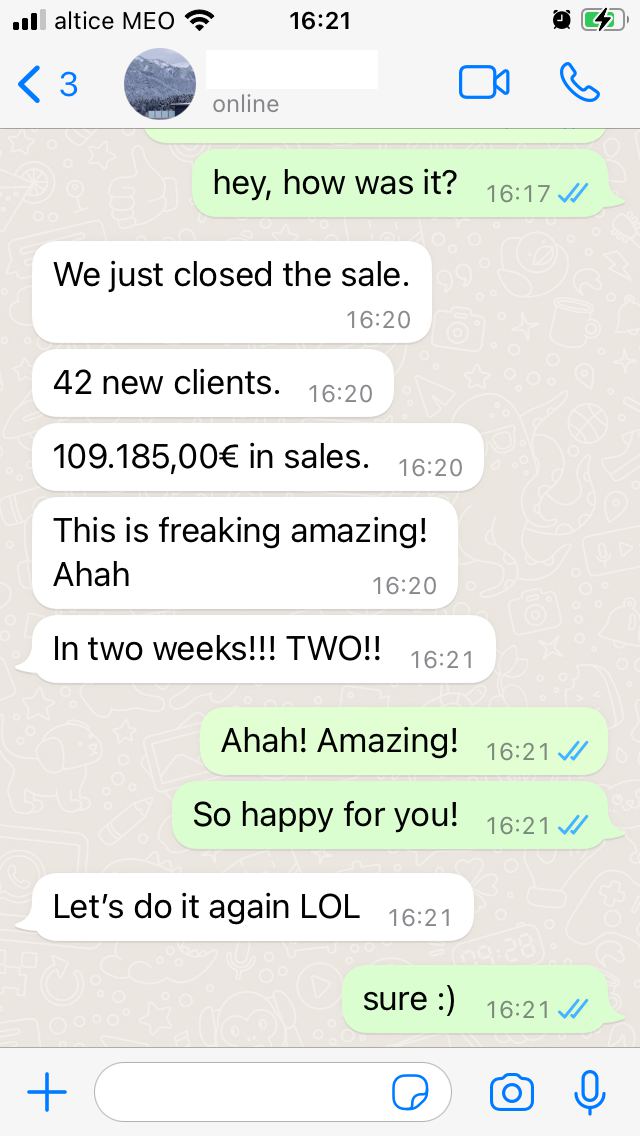
400 past buyers. €109,185 in two weeks.
A partner in real estate education had 400 people who'd bought from him. The conversations this email opened turned into 42 clients and €109,185 in two weeks. His best year ever was about three times that.
Which means one email to people he'd already sold to brought in about a third of a record year, in 14 days.
A launch that looked finished. Then another $45k.
Back in 2020, a partner had just run a 3-day workshop launch and closed $50k. Same list, same offer. It looked like every sale had been made.
Then we sent these emails. 9,786 of the 14,559 subscribers engaged (67.8%), and we closed another $45k.
Which means the conversations almost doubled the sales of a launch everyone thought was over.
This one's from 2020, before I kept screenshots of everything. So here you'll have to take my word for it.
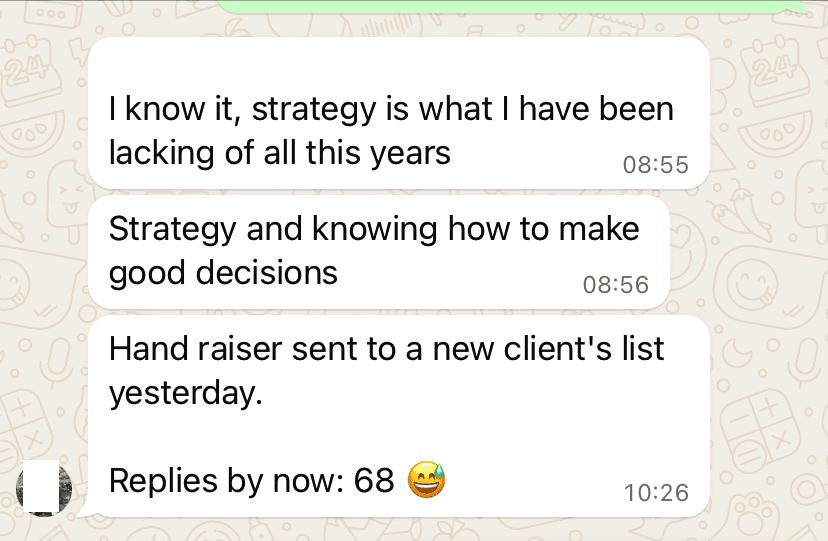
68 replies by the next day.
A mentee I worked with sent my whole-list email to a Spanish-speaking list. The next day:
70% moved up.
At Human Garage, 70% of the people who bought a USD 332 program moved up to the full certification. The next sale was already sitting with people who'd said yes once.
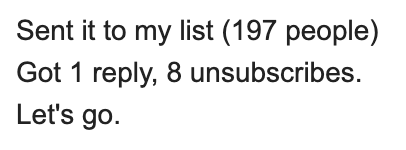
197 people. A list he'd ignored for months.
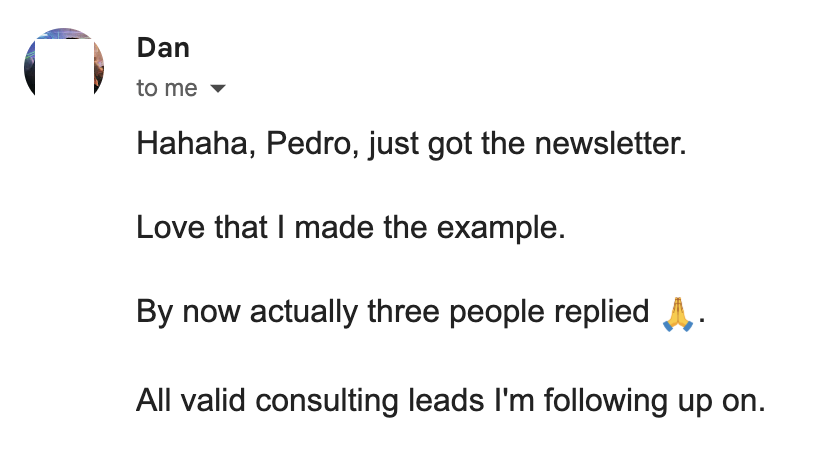
Dan hadn't emailed his list "in forever". He sent his own version of my whole-list email. His first update to me:
Three consulting leads from a list he'd ignored for months. Which means you don't need a big list, or a warm one, to start.
The chase vs the Reverse Chase
The chase
The Reverse Chase
You pitch
They ask
You have to qualify them
They qualify themselves the moment they reply
A discovery call to find out if they're interested
A one-word reply that tells you
Three follow-ups
They write back first
"Let me think about it"
"Tell me more about it"
Every "no" lands on you
Nobody says no to a question about their own results
Premium months depend on luck
Send it every month and see who's ready
What you don't need
A huge list with rockstar numbers. Dan had 197 people. As long as people still recognise your name, they reply.
A list you've kept warm. His hadn't heard from him in months.
A new offer. The replies tell you what people want next.
Ads, a funnel or a website.
Sales calls. The whole conversation can happen by email.
To be "good at selling". You ask one question and answer the people who reply.
All you need is a few people who know who you are. Past buyers make it even better.
What's one of these conversations worth to you?
Say 30 people have bought from you.
If one in five replies, that's 6 conversations this week with people who already trust you.
Six conversations might sound like a lot to handle. It isn't. You get the reply to send to each kind of answer, word for word, and a simple sheet that shows who's where. You answer, they tell you more, and the conversation leads itself.
So, if you could open at least one new premium conversation this month, with someone who has already told you they want what's next, what would that be worth to you?
And next month, when you send it again and more people are ready?
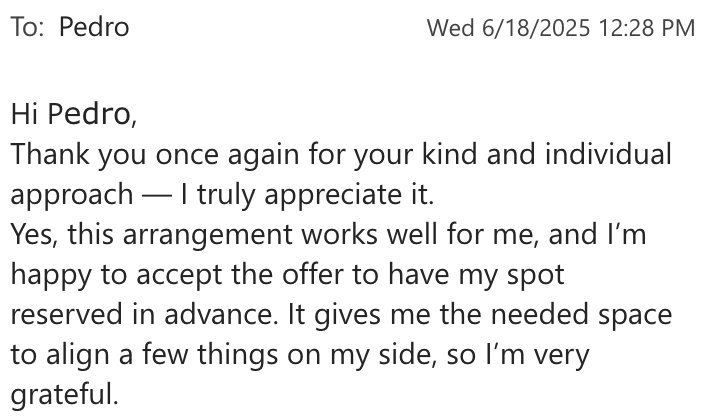
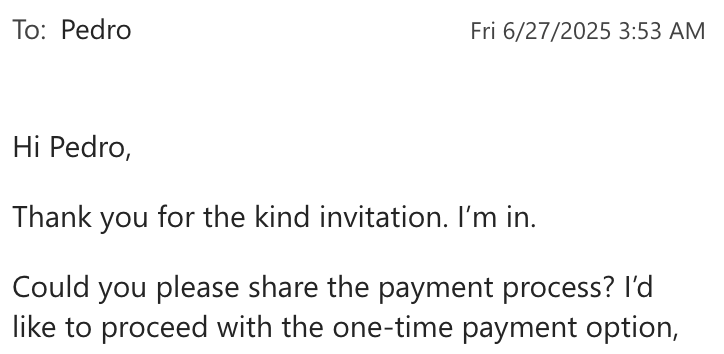
Here's what those conversations look like when they turn into a sale. Both came from Robin Sharma's list, for a USD 2,000 live program, sold in the email thread. No call.
Notice how they feel. Thankful. Respected. Nobody got pushed.
Some of the people who weren't ready last month are ready this month. As long as you keep sending these, you keep opening sales conversations. And the bigger and more engaged the list, the more you open each time.
What you get
The Reverse Chase Email
Copy it. Change one line. Send it today.
The 4 lines for your buyers, ready to paste, plus the subject line that gets them opened
My #1 email for your whole list, buyers or not, and what to do with each answer
The exact reply to send to the ones who are ready, so the conversation moves toward a sale without a pitch
What to say to the ones who aren't ready yet, so they get unstuck, and show you what to build next
Who to email first if you've sold more than one thing
The one line you change, with examples for coaching, courses and services
Why sending it every month doesn't annoy anyone, and what to change so it feels new
IncludedEvery reply, word for word"What do I say when six people reply?"
The exact answer to send to the ones who are ready, and to the ones who aren't yet. Copy it, send it, and the conversation leads itself toward the sale.
Bonus 1The Instant Warm-Up Playbook"My list hasn't heard from me in months."
What to send first, so the question lands with people who remember you. Dan needed this.
Bonus 2The Follow-Up Email Blueprint"What if they don't reply?"
What to send next, so the quiet ones get a second chance without you chasing anyone.
Bonus 3The Year-Round Email Blueprint"Won't it feel repetitive next month?"
Twelve months of the question, changed each time, so it always feels new.
Bonus 4The Opportunity Tracker"How do I keep track of all these conversations?"
One sheet. Who's ready, who isn't yet, what's in the way. So no reply falls through the cracks.
Your week ahead
Today: send the first email.
Still today: get the first replies and answer them.
This week: conversations with people who already trust you, and who've told you where they're at with a problem you can help them with.
The goal: close some sales. And the ones who don't buy yet? They get readier for next month's email.
Next month: send it again. Same emails, new people ready. Every month.
Sent over a million times. Yours for a fraction of what it opens.
These emails aren't an idea I'm testing on you. They've been sent over a million times, to my partners' lists.
So I know what happens, and how fast the replies can pile up.
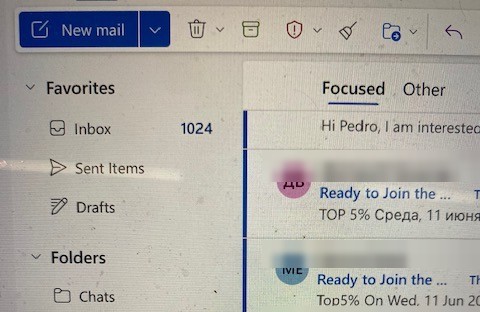
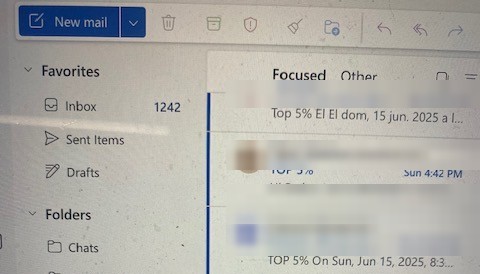
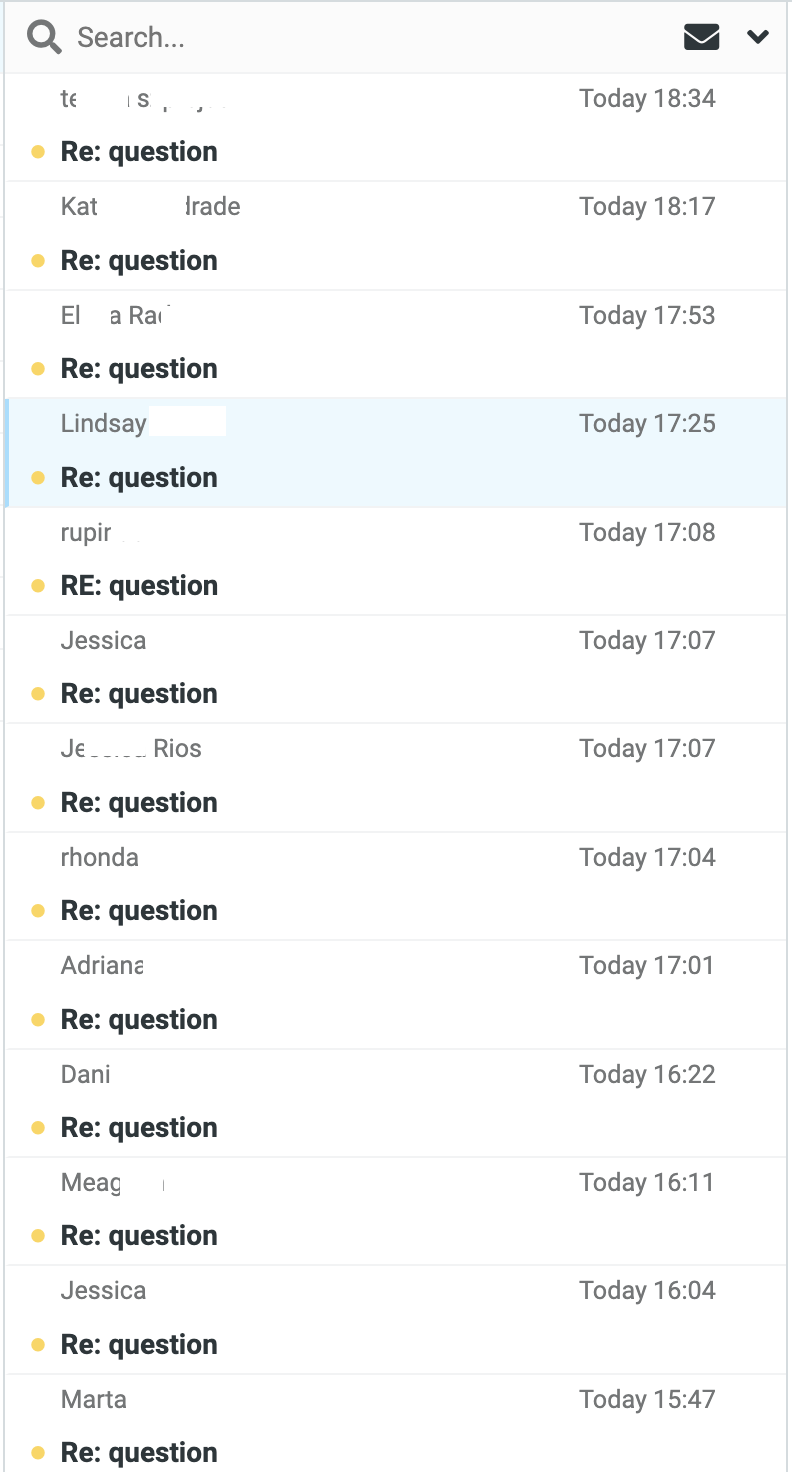
On Robin Sharma's list, on 11 June, 1,024 replies were waiting in the inbox. On 15 June, another 1,242.
Robin's reply inbox on 11 June and 15 June 2025. Names hidden.
That's thousands of people telling you what they want, and who's ready. Every one of them a conversation.
Your list doesn't need to be Robin's size. The size is only the starting line. All you're doing is putting the trust you already have to work.
Next month you send it again, to everyone who joined since. And a few months in, the opportunities stop arriving once a month. They arrive every day.
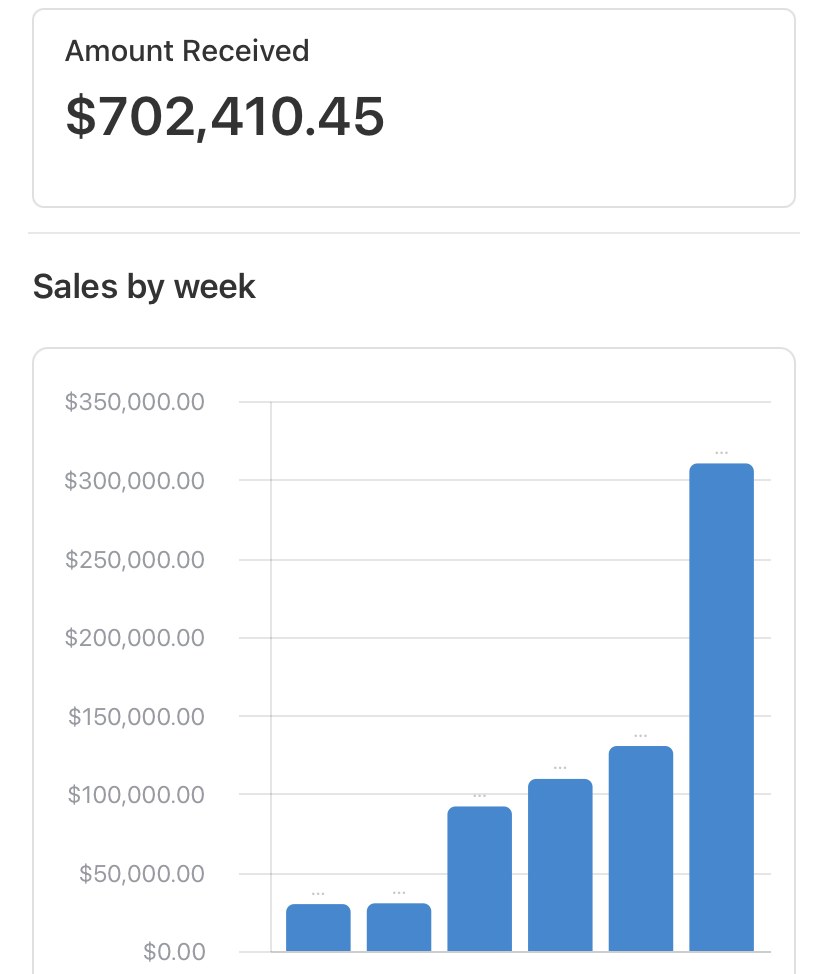
At Human Garage, 3,500 people spoke up, out of a list of 75,000 at the time. The launch those conversations started brought in over $700,000 in five weeks, and more than $2 million in the end.
The Human Garage launch, week by week, 14 May to 18 June 2025.
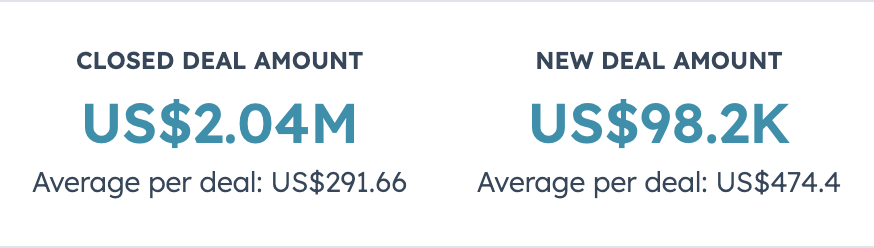
And one Human Garage offer, a year later: US$2.04M closed.
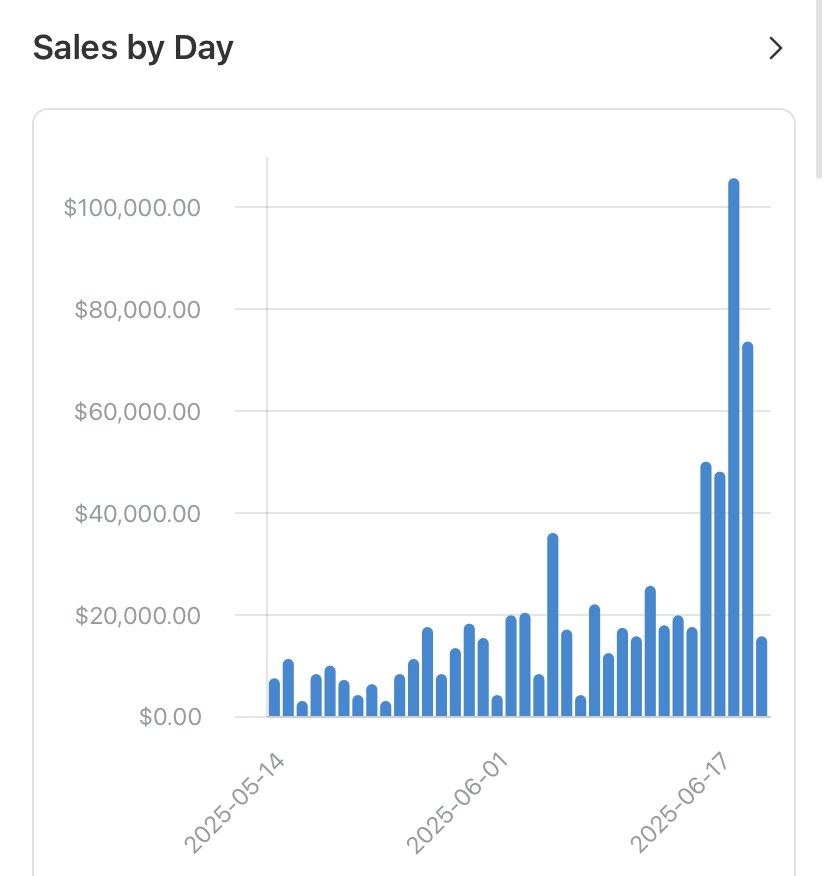
And when conversations are happening, you never really know when people will be ready to join. Here's the same launch, day by day. Look at the days that jumped.
You get surprised like this far more often when people are talking to you, than when nobody is.
Every test behind those numbers is in what you get. For a fraction of what a single reply can turn into.
Your members area opens right after you pay. You can send it within the hour.
The Reply GuaranteeSend the email within 30 days. If nobody replies, write to me and you get every cent back.
Two ways from here
Keep doing what you're doing. Your posts, ads and content grow your audience, and that feeds everything else.
But on their own, they leave your premium months to luck.
The Reverse Chase adds one layer on top of the attention and trust you already have. The layer that turns that attention and trust into premium sales you can count on, month after month.
It takes 4 lines. And I've written them for you.
Send them today. The people ready for your next step tell you. The ones who aren't there yet tell you what's in the way. Either way, every premium sale starts with them sharing where they're at.
If you'd rather be told than chase, this is where it starts.
One payment. Yours to keep. If nobody replies, every cent back.
Questions
What exactly do I get?
The 4 lines for your buyers, with the subject line. So you can send it within the hour.
My #1 email for your whole list. So people who haven't bought yet put their hand up too.
Every reply, word for word. So you know what to say to the ones who are ready, and to the ones who aren't yet.
The Instant Warm-Up Playbook. So it works even on a list that hasn't heard from you in months.
The Follow-Up Email Blueprint. So the people who don't reply get a second chance, without you chasing.
The Year-Round Email Blueprint. So you can send it every month and it never feels like a copy.
The Opportunity Tracker. So no reply falls through the cracks.
My list is small.
Dan's was 197 people, and he got three consulting leads. A small list means fewer replies. Not worse ones.
My list hasn't heard from me in months.
Neither had Dan's. Start with the Instant Warm-Up Playbook.
Do I need a premium offer already?
No. The replies tell you what people want next. If you don't have it yet, they'll show you what to build. And you can still close them before you build it or make it available. I do this all the time for my partners.
Will I have to get on sales calls?
No. The whole conversation can happen by email or messages. I've closed millions this way, without getting on a single sales call.
Why is it only €9?
Because every premium sale I make for my partners starts with one of these emails, and I'd like more people opening those conversations. And when the replies pile up and you want help turning them into sales, that's when we talk again.
Won't people unsubscribe?
A few might. Dan lost 8 and got three consulting leads. The people who leave weren't going to buy. The ones who reply are.
What if nobody replies?
Then you get every cent back. That's the Reply Guarantee.
P.S. If you skipped to the bottom: the people most likely to buy your premium offer already know you. These emails let them tell you they want more, before you sell them anything. Dan sent one to 197 people he hadn't emailed in months and got three consulting leads.
Here's everything you get:
The 4 lines for your buyers, with the subject line, so you can send it within the hour
My #1 email for your whole list, so people who haven't bought yet put their hand up too
Every reply, word for word, for the ones who are ready and the ones who aren't yet
The Instant Warm-Up Playbook, for a list that hasn't heard from you in months
The Follow-Up Email Blueprint, so the quiet ones get a second chance
The Year-Round Email Blueprint, so it never feels like a copy
The Opportunity Tracker, so no reply falls through the cracks
€9, one payment. And if nobody replies, every cent back.

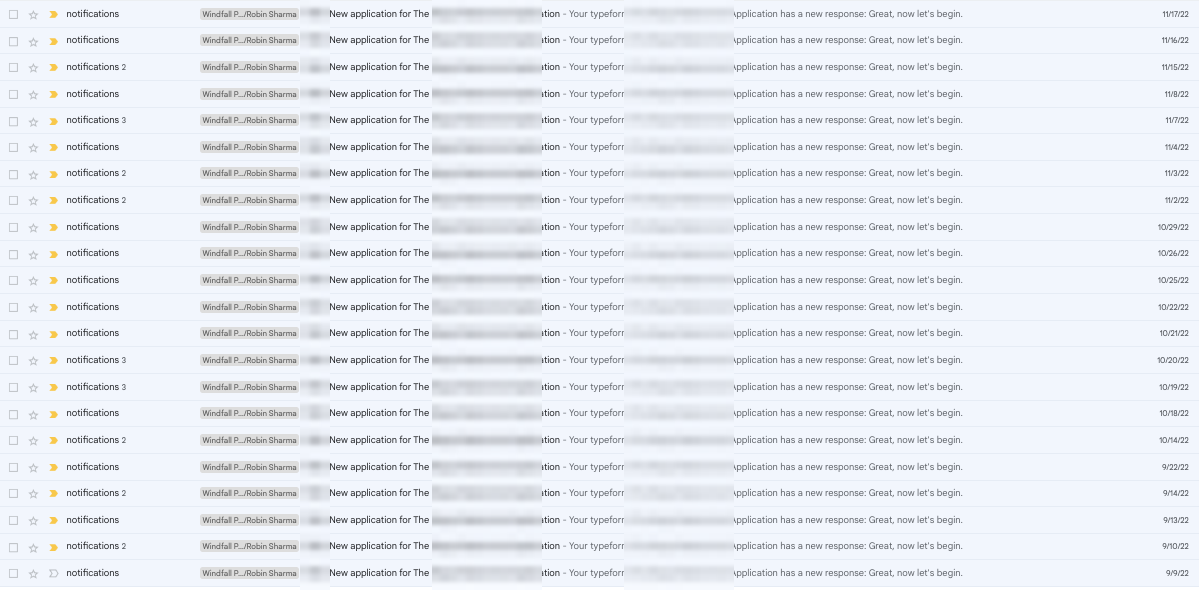 Applications for Robin's mastermind coming in, autumn 2022. Each notification is a USD 36,500 sale, and some days brought more than one.